Human signal
What the team brought back
“Everyone was talking about controlling their AI spend and figuring out how the org could all get on the same page.”
“Everyone was talking about controlling their AI spend and figuring out how the org could all get on the same page.”
Only selected context enters this run.
Claims · sources · dates · status
Owned repo or approved data store
AI made the individual faster. The hard part was making judgment survive the handoff.
Open with the conference conversation.Lead with the operating problem. Use the conference as evidence.
AI made the individual faster. The hard part was making judgment survive the handoff.
Lead with your own causal model. Use the news as evidence.
Editorial Training Data · Example 32b
Signal
“Everyone was talking about controlling their AI spend and figuring out how the org could all get on the same page.”
Research + context
It loads company instructions and the content specialist; pulls strategy, roadmap, positioning, customer calls, competitor coverage, search demand, and sources; then saves the research without pulling the rest of the repository into the run.
Human review
Research turns the signal into a proposed argument. A person changes the framing, confirms the outline, and decides what the draft should say before production begins.
Draft + learn
Specialists produce, challenge, and polish. The system compares the AI draft with the final human version, then proposes the lesson for specialist memory, editorial training, content principles, and the next run.
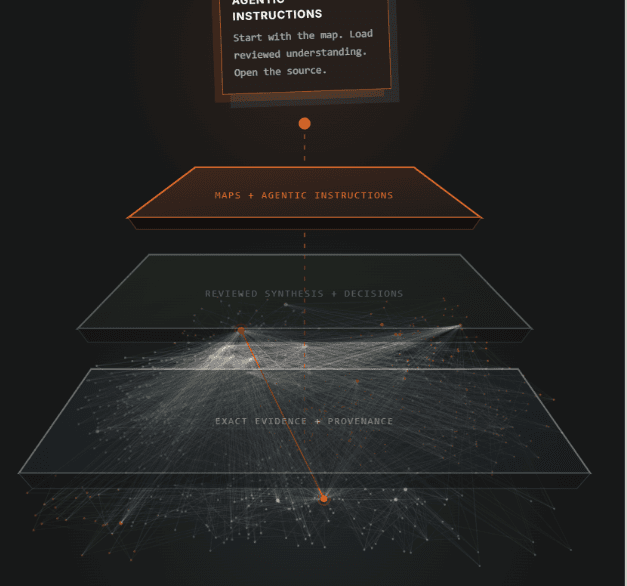
One job sits above four connected layers in a company-owned system.
A tuned skill, research agents, tools, and a human decision remain connected to those layers. Approved lessons return to the ontology and research can be saved into the knowledge graph.
Completed work improves what comes next in three ways.
In the worked example, a new capability says “Audit logs are live.” The system proposes where that changes the business rather than applying changes silently.
The approved rule is written back for later work: enterprise healthcare is in scope and auditability is covered, linked to affected accounts and customers.
Build on a foundation that is portable, company-owned, and not trapped inside one model.
Stays with your company
We'll look at what's working, where AI can help, and what I'd prioritize next.
Book a strategy callNo obligation.
