
There's so much AI hype in GTM. And so much value unlocked. But it's all built on the same core foundational jobs to be done:
- Decide who to serve and why now
- Be found where buyers now look
- Start the right conversations
- Turn interest into an opportunity
- Win and grow the customer
- Learn from every outcome
A lot of the AI conversation in GTM starts with what agents can do, and the honest answer is a lot, which doesn't really help you decide where to point them. So I wanted to start a step earlier, with the jobs the funnel actually has (a job to be done is basically just a piece of work that has to get done, whoever or whatever ends up doing it), and then figure out where agents fit inside each one.
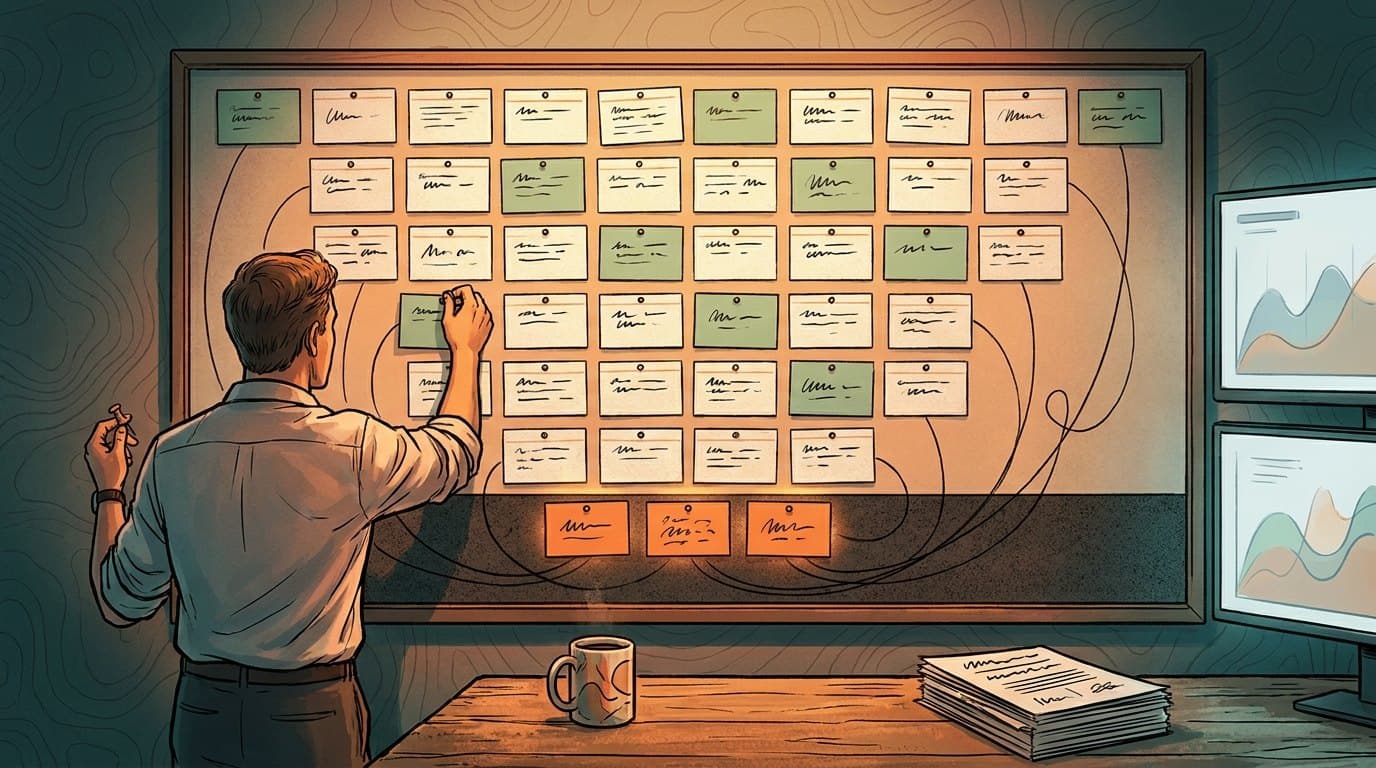
The map started as a brain dump. Another GTM operator and I spent one working session naming every GTM job we could think of, and that list got expanded against GTM research and my own prior work into 127 candidate rows. Merging those gave 33 cards for the top of the funnel, and filling out the later stages got it to 67. Every job sits on the funnel stages a company already runs, so none of this throws out your funnel (the stages and milestones stay, it's a picture of where each one is heading and it says nothing about how fast anyone gets there).
The six jobs, plus the two underneath them
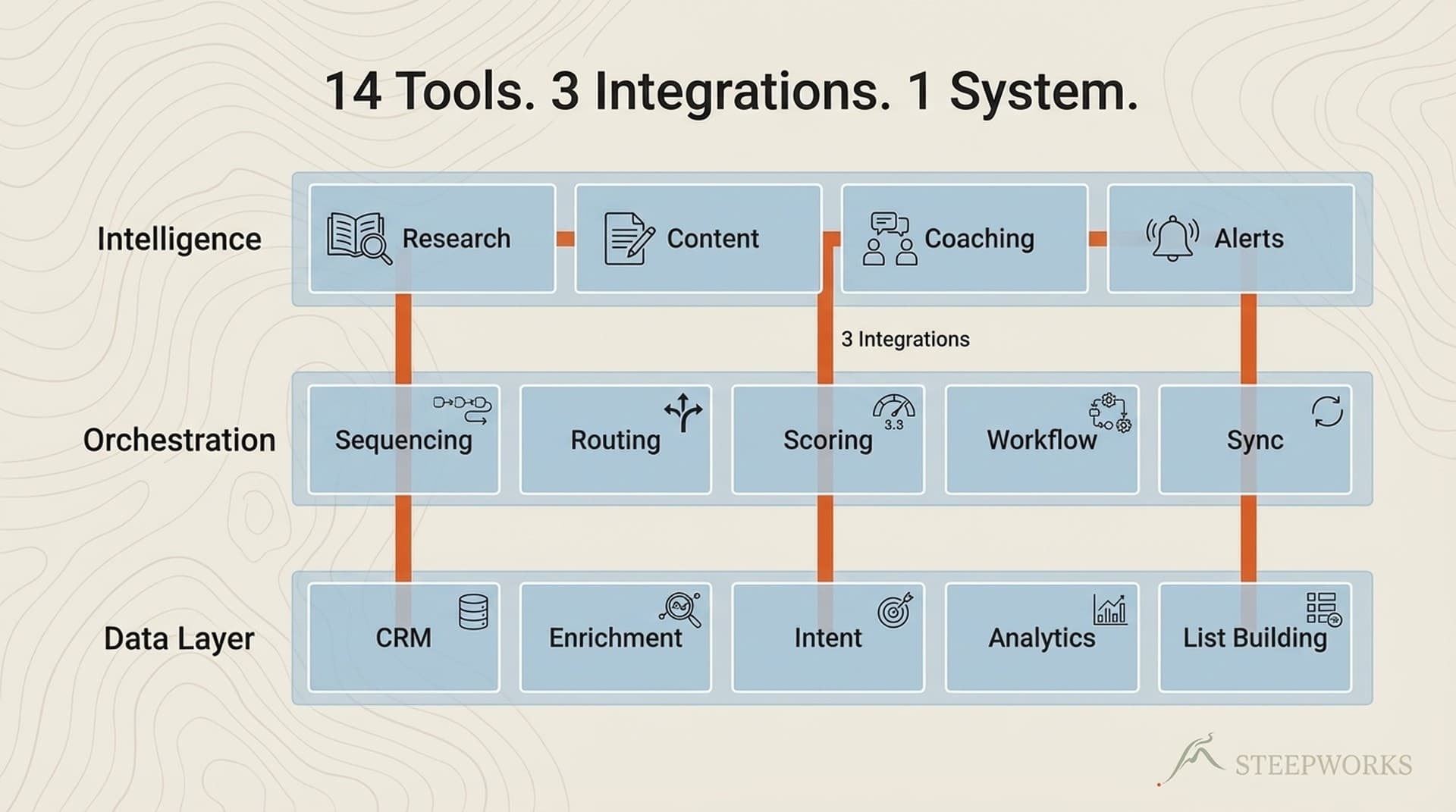
Two more jobs sit under the six, keeping one shared context and memory, and running the agents themselves. All 67 roll up into one of those eight, so inside them you've got things like building target lists, getting cited by buyers' AI assistants, researching each account and writing the brief, routing each lead to one owner, flagging stalled deals for managers, working out why deals were won and lost, saving every research run by account, setting what each agent may read, write and send, and so forth.
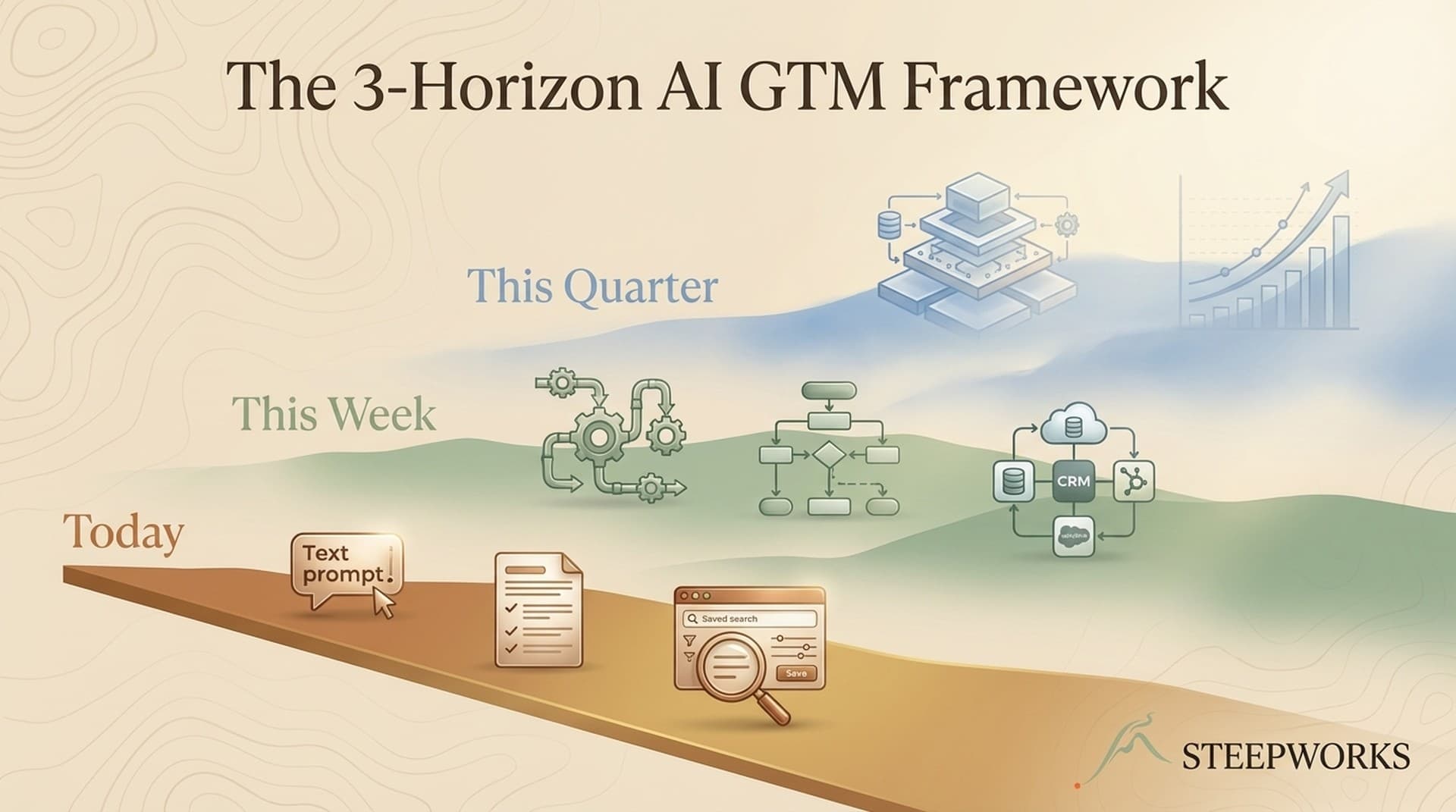
You'd recognize pretty much all of those. What changes is how much of each one an agent does, and where a person still signs off.
Only three jobs are actually new with AI agents
Getting to three took two passes. The first pass kept seven candidates that looked new and had some research behind them, then four of those failed a pretty simple test, did the job exist before AI in some form. Those four were basically older jobs with a new coat of paint (tool budgets, picking intent data, routing rules, lead-flow monitoring). That left tests built from rep decisions, one official description of the company that every agent reads, and a shared memory of every research run.
The second pass was AI reviewers playing skeptical buyers. One of them pointed out that the company-description card listed its own older names right on it, messaging docs and the sales playbook. It's the messaging doc with a new reader. The research memory card had the same problem (its older name was research capture), so both went back to being older jobs that AI reshapes, which left one.
BUT that same review named two jobs the first pass had missed, the review queue and agent operations, and it said the review queue is where programs built on agents "die in practice." I'd agree. The list got back to three, and all three are about running the agents.
Evals are the clearest case. Every time a rep accepts or rejects an agent's draft, that choice gets saved as an example of good or bad work, and the agent's tests get built from those examples. Nothing before AI turned a rep's yes or no into test data for that agent.
The review queue is new in a narrower way. Deal desks and legal were approving discounts and contracts long before agents showed up. What's new is a standing queue for agent output, with a named approver and a deadline, where the edit rate on each job tells RevOps how much review it still needs. And every job with a sign-off adds work to that queue, so it's going to turn into the bottleneck.
Agent operations sounds like the least exciting of the three. Every change to an agent gets saved as a version you can roll back, it runs through a regression test, and there's one switch that stops every automated action. None of that had a real version before agents.
So 64 of the 67 are jobs a GTM leader already knows, with agents doing more of the work inside most of them. On the graphic for this map I put it in two lines.
Agents make it cheap to do a lot. But you still need to know what's worth doing and what good looks like.
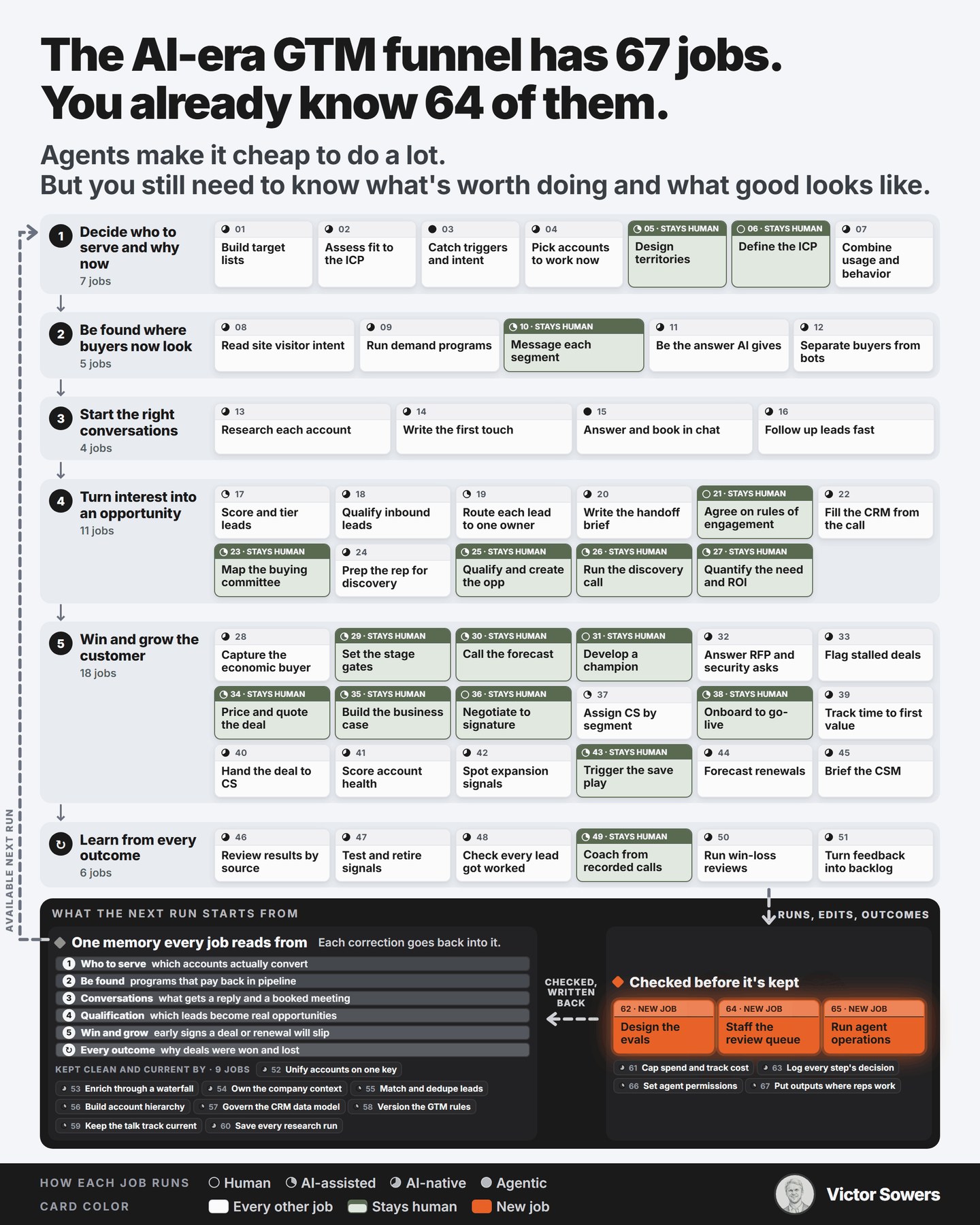
17 jobs where a person still makes the call
My first cut of the map said four jobs stay with people. The re-cut said 17, and the difference came down to how the data was set up.
Every card rates how its job runs on a four-step scale (Human, AI-assisted, AI-native, Agentic), and the first version only let a card say it stays human if it was rated fully Human. Only four were rated that way at target: the ICP, the rules for passing leads from marketing to sales, developing a champion, and negotiating through procurement and legal to signature.
I read that and pushed back. My exact words were "There are way way more jobs here that I would characterize as staying with humans." The fix was to make who owns the outcome and how the job runs two separate questions, because plenty of jobs run AI-assisted and a person still owns the call. Thirteen more cards got a written reason to stay human, all 13 of them AI-assisted, which makes 17. And since the web map gets generated from one data file and nobody hand-edits it, the move from 4 to 17 was literally an edit to 13 cards, each with its reason.
Territory design is a good one to look at. RevOps owns it, a person does it today, and in the target picture it runs AI-assisted. The reason on the card is "Carving territories is a decision RevOps and sales leaders own. AI models the coverage and balance options; it does not pick one." And the metric it moves is coverage balance across territories.
Most of the other 16 are a live conversation with a buyer or customer, or a call someone has to answer for, like the price or the forecast. Coaching is on there too, because it's one person developing another.
If you want a quick test for your own funnel, ask where someone has to sign their name. However much prep an agent does, that's usually a person's call.
The shared memory is the part that compounds
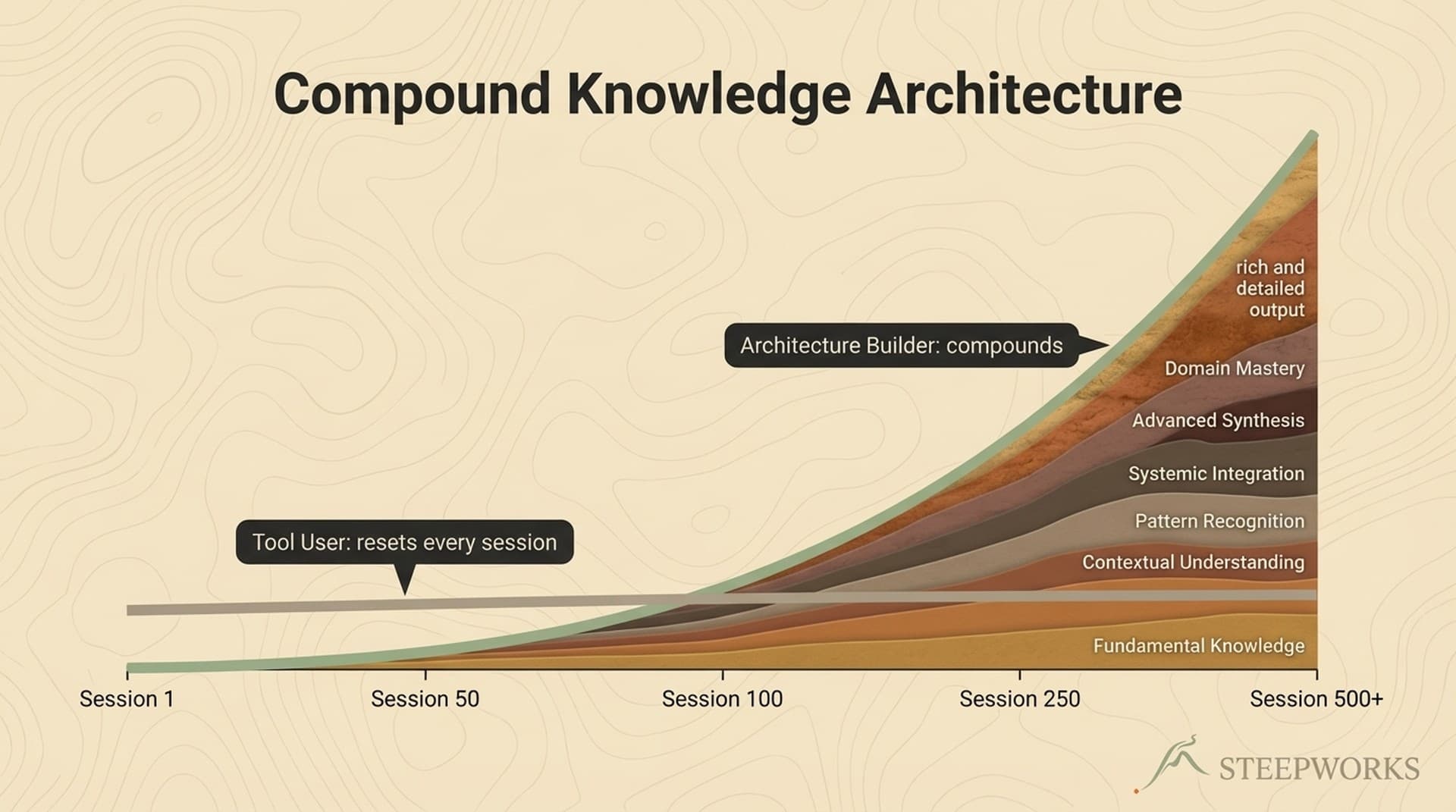
Honestly what I think is awesome about all of this is the compounding context. In the picture the map draws (and to be clear, that's the target design, I'm not claiming anyone runs it this way today) there's one shared memory with the account list, the current description of who you are and who you sell to, and the rules. Every research run, call summary, approved rule change and rejected draft gets saved there by account, and the rejected drafts keep the reason they got rejected. People and agents both read from it before they start.
Take one account brief. The agent pulls the last saved run on that account and writes the new brief from there. The rep reads it and rewrites the angle before the first email goes out, and the brief plus the rep's edit go back into memory under that account.
That edit also counts in the review queue, so if the edit rate on briefs comes down, RevOps can decide briefs earn less review, and if it doesn't the job moves back down the scale to more hands-on review. AND the next run on that account starts from the saved one (a saved run that's gone stale gets flagged).
When a result looks wrong, people decide what changes and RevOps changes the rule that produced it, so next week starts from the changed rule. The map sums it up as a funnel that gets a little less wrong every week, and that's about what I'd promise.
How to use it on your own funnel
Pick one stage. For each job in it, ask four questions.
- Who does it today?
- What would an agent do?
- Who signs off?
- Where does the record go, so the next run can use it?
The splits between agent and person on the map are judgment calls (they weren't measured), and the cards near the top of the funnel are the most complete. The later stages are done-ish and still need fuller detail.
The 67-job map
The interactive map has a card for every one of the 67 jobs, and each one has who owns it, how it runs today versus where it's going, the reason it stays human if it's one of the 17, and on most of them the metric it moves. Hold it up against your own funnel card by card, and if you think one of the 17 belongs with the agents, or I missed a call a person should still make, tell me.