
Five years ago, if you told a VP of Sales that their next critical hire would build data pipelines and write automation scripts, they'd have asked if you were confused about the department. The title "GTM engineer" didn't exist in 2021. By early 2026, LinkedIn listed over 3,000 open positions. Bloomberry's analysis of 1,000 GTM engineering job postings found a 205% year-over-year increase from 2024 to 2025, with roughly 100 new listings per month.
This isn't a new job title. It's the market signaling what GTM needs that traditional roles can't provide.
Compensation makes the signal harder to ignore. GTM engineers average $182K, exceeding traditional RevOps roles ($118-129K) by 40-50%, according to the Revenue Operations Alliance. The market is pricing in something the org chart hasn't caught up to.
But the job listings miss something: they describe the role as a set of skills -- automation, data, AI tooling. They don't describe the identity, the way of thinking, that makes someone effective in it. That identity is what matters.
My experience is building these systems on teams of 1-50 -- startups, mid-market GTM orgs, lean ops teams. Enterprise GTM engineering has different dynamics: procurement cycles, org politics, compliance gates. I'm writing for the operator who can actually change how their team works.
The Ceiling on Traditional GTM Roles
I've spent 15 years in traditional GTM roles -- SDR, AE, marketing leader, VP. These roles taught me how revenue works. They didn't teach me how to build systems that make revenue work better over time. That's a different skill, and the market is paying a premium for it.
Three structural limitations kept showing up -- not because these roles are broken, but because they were designed for a different era.
SDRs and AEs: Trained on Playbooks, Not Systems
The SDR/AE career path builds execution within a given system: follow the playbook, hit the metrics, advance. What it doesn't build is the ability to see the playbook itself as something you can redesign.
I was an SDR. I was good at it. Playbook execution is necessary -- it teaches buyer psychology and deal mechanics you can't learn any other way. But it's not sufficient. When AI makes the old playbook obsolete (generic cold email at scale is dead), playbook-trained reps struggle because they were trained to run the system, not rebuild it.
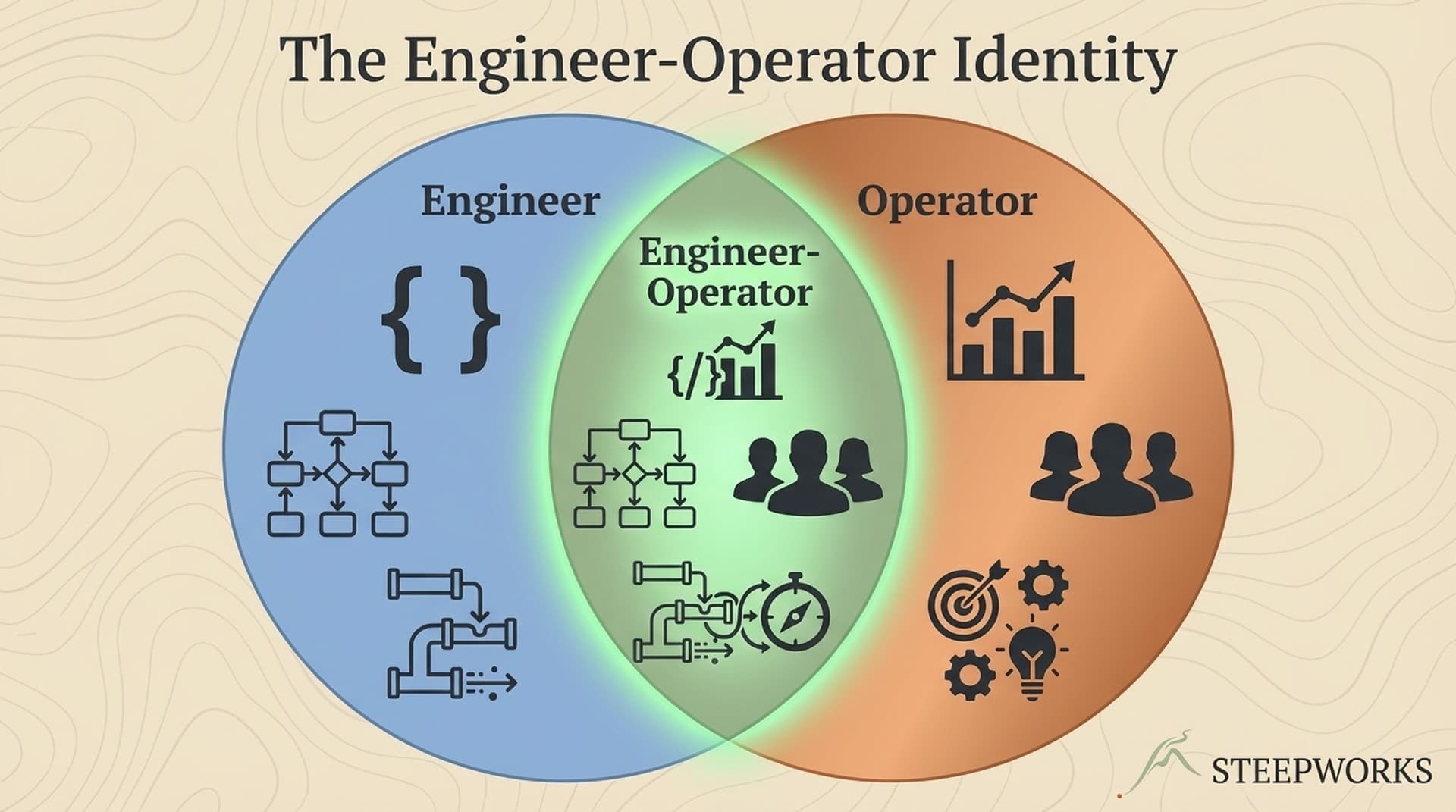
The SDR who can run the playbook AND see it as improvable becomes a GTM engineer. Or a VP of Sales. Or a founder. The engineer-operator identity adds the layer above: seeing the constraints themselves as designable. The difference between following a deployment checklist and understanding the pipeline well enough to redesign it when requirements change.
Marketing Ops: Maintains Tools, Doesn't Build Cross-Functional Workflows
Marketing ops professionals are brilliant at maintaining the stack -- keeping HubSpot configured, ensuring data flows, managing integrations. But the role is scoped to marketing's boundary. When the highest-value opportunity is connecting marketing's enrichment data to sales's outreach workflow to CS's renewal signals, marketing ops doesn't have the mandate or cross-functional visibility to build that system.
The limitation isn't competence. It's organizational scope. Traditional ops roles are siloed by function, and the systems that compound value cross those silos.
RevOps: Improves What Exists, Doesn't Create What's Needed
RevOps is the closest traditional role to the engineer-operator identity. RevOps professionals think cross-functionally, understand data, care about process. But the Revenue Operations Alliance nailed the distinction: "Where RevOps operates inside the existing system, GTM Engineering builds the systems that don't exist yet."
RevOps improves. GTM engineering creates. Both essential. But when AI makes it possible to build workflows that didn't exist 18 months ago, the "create" function is the bottleneck.
I've seen this in my own work. The RevOps approach to deal-health: configure HubSpot properties, build a dashboard, set up alerts. The engineer-operator approach: build a 9-mode dispatcher connecting deal-health scoring to forecast prep to coaching prep -- where the output of one mode feeds the next, and the whole thing gets smarter as more deals flow through. Same problem. Different architecture. Different ceiling.
More on the systems-vs-tactics distinction in Systems Over Tactics.
What "Thinking in Systems" Looks Like
"Thinking in systems" sounds smart in a conference talk and means nothing in a Slack channel. Let me make it specific.
Systems thinking in GTM means three things -- none require a CS degree. They require persistence, domain knowledge, and the habit of asking "what feeds what?"
Seeing Workflows as Data Pipelines
When an engineer-operator looks at prospect research, they don't see "a task someone does." They see inputs (company data, contact data, intent signals), transformations (enrichment, scoring, segmentation), outputs (prospect briefs, prioritized lists), and feedback loops (which prospects converted, which sources were reliable).
Same mental model behind every data pipeline in software engineering. Fetch, transform, store, export, monitor. The concept transfers -- not because you need TypeScript, but because thinking in connected phases with feedback loops is universal.
I rebuilt our prospect research workflow three times. Version 1: a checklist -- 8 manual steps, 40 minutes per prospect. Version 2: automated 5 of those 8 steps. Version 3: connected the output to our CRM and piped conversion data back to refine enrichment criteria. Each version wasn't just faster -- it was smarter, because the system learned from its own results.
A traditional operator stops at version 2. "We automated it, we're done." The engineer-operator sees version 2 as the foundation for version 3 -- the one with the feedback loop. Getting there required patience to iterate over months, domain expertise to know which conversion signals mattered, and persistence to keep rebuilding when version 2 felt "good enough."
The same pattern shows up in content operations. My newsletter pipeline runs five chained phases: fetch articles, classify by relevance, store structured results, export to distribution, notify on completion. Each phase's output feeds the next. Each run's results inform the next run's classifications. But the reason it works isn't the architecture -- it's that I spent months understanding which event sources my audience cares about, which classification criteria separate signal from noise, and which export formats the distribution channels need. Domain knowledge is the architecture's soul.
Noticing Disconnected Data Pools
Three disconnections most GTM teams live with daily:
Your CRM doesn't know what enrichment found. Clay data sits in Clay. HubSpot doesn't reflect it. A rep opens a contact record and sees the same thin profile from before you paid for enrichment.
Your enrichment doesn't know what outreach sent. You researched a prospect in one tool, wrote the email in another, and neither knows the other exists. Every touchpoint starts from zero.
Your outreach doesn't know what content the prospect read. Sequences fire regardless of whether the prospect just downloaded your whitepaper or visited your pricing page. No memory.
The engineer-operator sees these gaps not as inconveniences but as system failures -- places where context dies and every interaction starts from zero. Most GTM teams have 6-10 tools that each contain a slice of context. The instinct is to connect them, because disconnected context means linear value while connected context means compound value. (implementation consulting)
In practice: build a shared context layer -- a single source of truth that 15+ workflows reference. Positioning, ICP definition, competitive intelligence, buyer personas -- all in one place that every skill reads from automatically. Change it once, every downstream workflow reflects the update. Infrastructure thinking applied to GTM. No code required. Just deep understanding of the problem. (See also: research prospect)
Designing for the 10th Use, Not the 1st
Traditional tool evaluation: "Does this produce a good output?" The engineer-operator's question: "Does the 10th output improve on the 1st? Does the system learn?" (See also: competitive positioning)
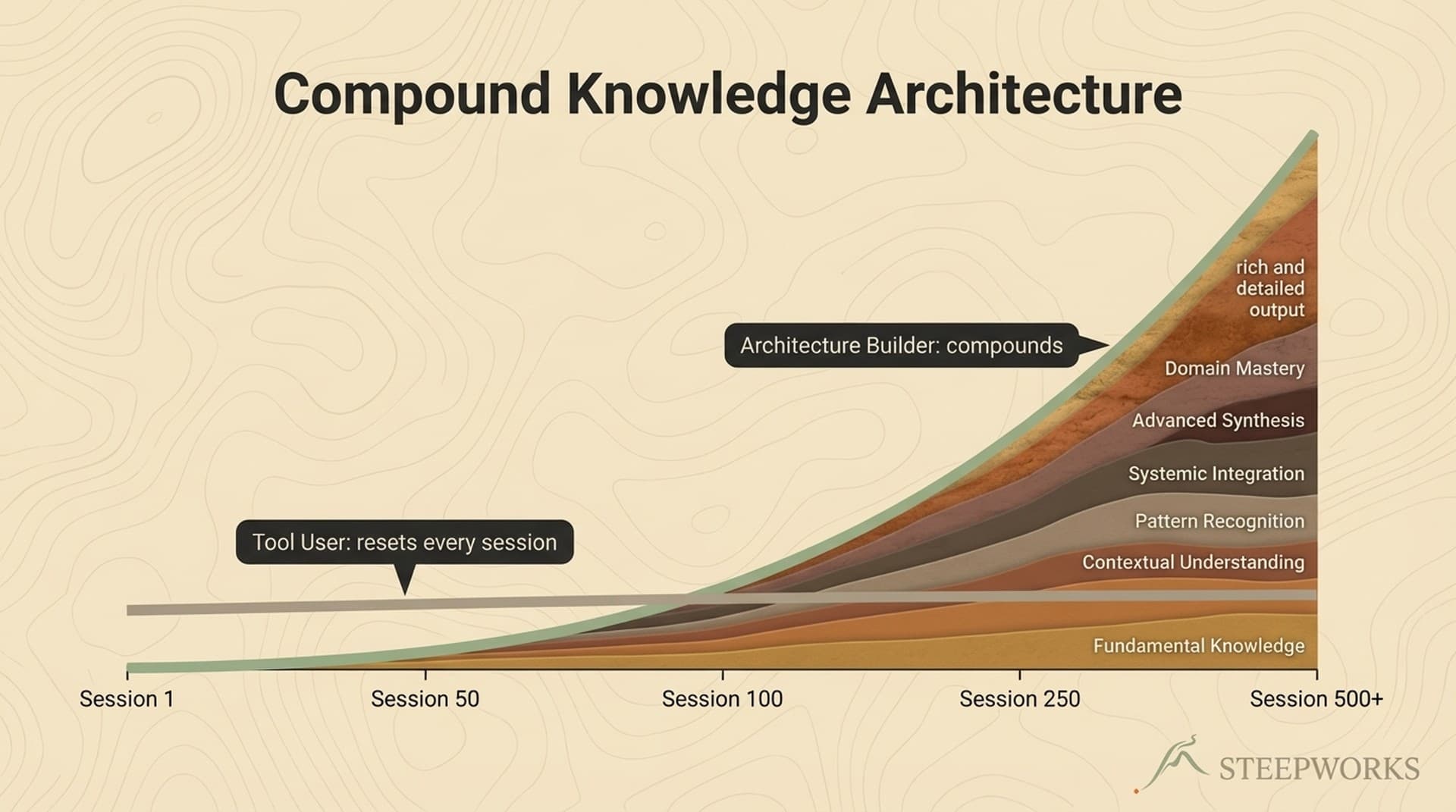
This separates tools from systems. A tool gives you an answer. A system gives you a better answer each time because it accumulates context. The difference is the feedback loop. (pricing and tiers)
BCG's 2025 study: the 5% of companies generating AI value at scale redesigned workflows before deploying technology. The pattern maps to individual operators too: define the system first, choose the tools second.
The first time I run a content dispatcher through its 10 modes -- quality review, SEO audit, cold outbound, email sequences, data stories -- the output is useful but generic. By the 10th run, the system has accumulated context about what resonates, which frameworks land, which tone works. The architecture didn't change. The accumulated knowledge did.
The AI Catalyst: Why This Identity Matters Now
The engineer-operator identity emerged because AI changed what a single operator can build.
Before 2023, building a connected prospect-research-to-outreach system required a developer, an integration specialist, and 6 months of custom code. After 2023, tools like Claude Code, Clay, and n8n mean a single GTM operator with systems-thinking skills can build, test, and iterate on workflows connecting data sources, AI models, and distribution channels. The barrier dropped from "hire an engineering team" to "learn to think like one."
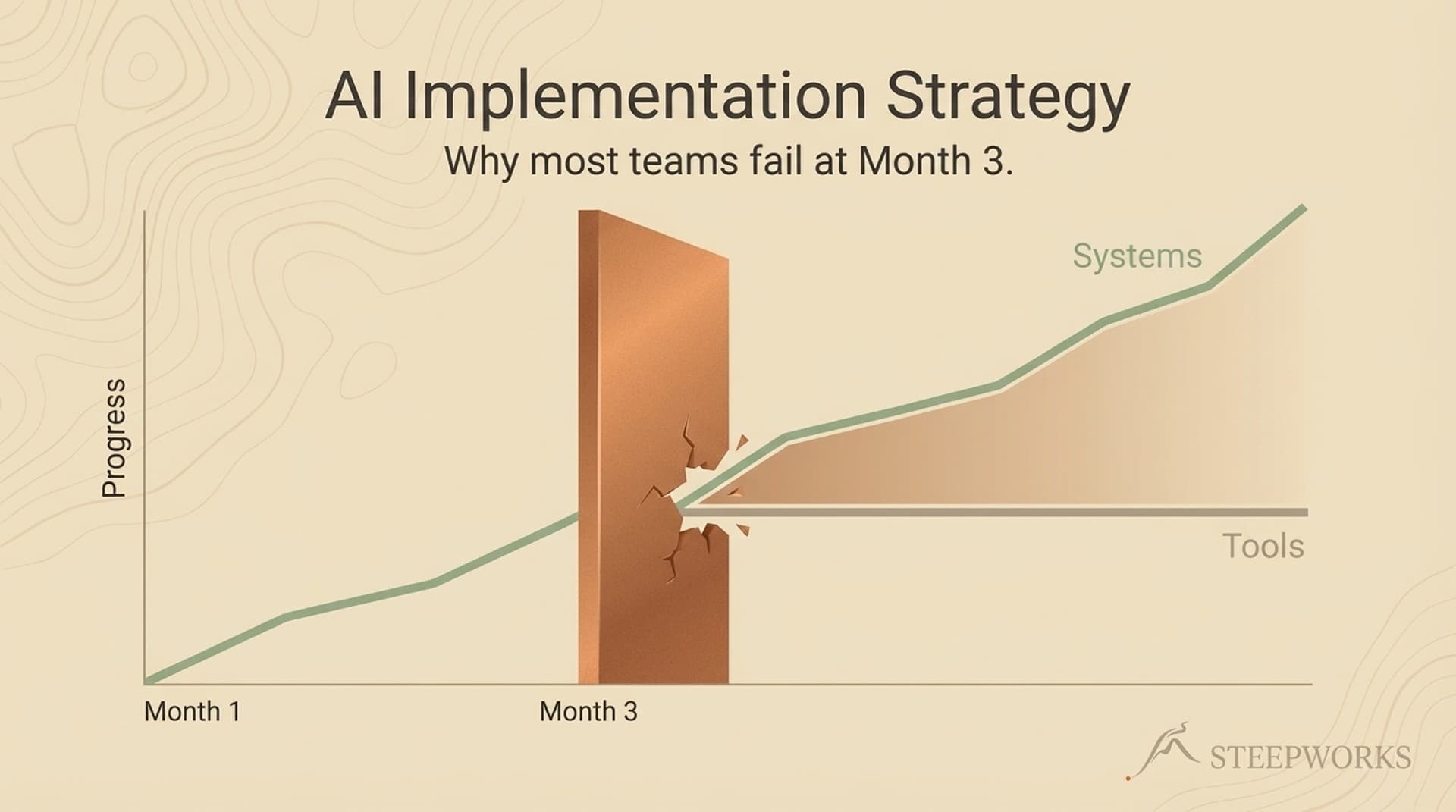
But the tools lowered the technical barrier. They didn't lower the thinking barrier.
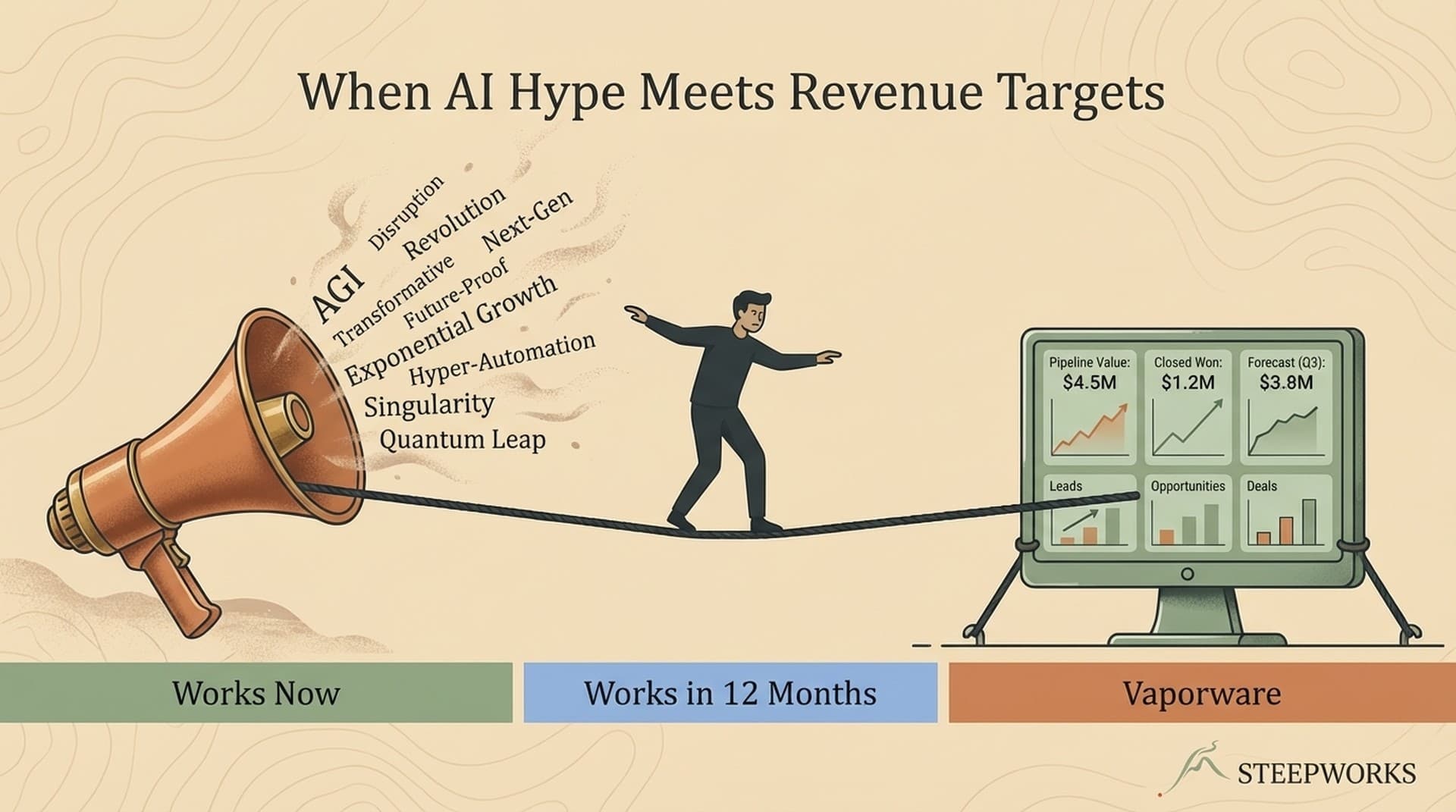
Maja Voje's 2026 State of GTM Engineering survey: 53% of GTM leaders reported little to no impact from AI. Only 24% saw real returns. The gap isn't tool access -- everyone has the same tools. The gap is the ability to think in systems, know which connections matter, and persist until the system works.
RAND found the same pattern: 80%+ of AI projects fail, primary root cause being "technology-first thinking" -- choosing the tool before defining the workflow. That's the cognitive pattern the engineer-operator identity corrects. Define the system first. But the engineers who succeed aren't the most technical -- they're the ones with the deepest understanding of the problem domain. In GTM: buyer psychology, deal mechanics, pipeline dynamics.
The market is formalizing this. The "AI-native operator" (Kyle Poyar's framing) and "GTM engineer" (the job market's framing) both point at the same identity: someone who builds AI systems, not just uses AI tools, bringing both engineering mindset and operator experience.
Building the Identity: What to Do
The engineer-operator identity isn't a job title. It's a lens. You can develop it as an AE, marketing leader, RevOps manager, or founder. The question isn't "should I become a GTM engineer?" It's "should I start thinking like one?"
This doesn't mean every AE needs Python. It doesn't mean RevOps is obsolete. It means seeing your work as systems -- inputs, outputs, connections, feedback loops -- rather than tasks to complete. Your domain expertise is the foundation, not the ceiling. Engineering concepts (version control, deployment pipelines, feedback loops) are thinking tools. Your GTM experience is what makes them valuable.
Start With One Workflow, Not the Whole Stack
Pick your highest-frequency manual workflow -- the one you do 10+ times per week. Map it: inputs, transformations, outputs, feedback. Where does context die between steps? Where does information get entered twice? Where do you start from zero when you shouldn't have to?
Don't automate it yet. Just map it. You'll see gaps you didn't know existed.
Learn to Build, Not Just Configure
The operator configures tools within their existing capabilities. The engineer-operator builds workflows that connect tools in ways the vendors didn't design for.
This doesn't require code, though it helps. It requires learning how data flows between tools -- APIs, webhooks, structured outputs, context injection. The skill isn't "programming." It's "understanding how systems connect."
Practical starting point: pick two tools your team already uses. Make the output of one automatically feed the input of the other. Clay-to-HubSpot. Claude-to-CRM. That one connection teaches more about systems thinking than any conference talk -- because the hard part isn't the integration, it's knowing which connection creates the most value.
This is what production skill chains look like -- connected workflows where each step's output feeds the next. A content operation routing through 10 modes. A RevOps suite connecting deal scoring to forecast prep to coaching prep. A newsletter pipeline chaining fetch-classify-store-export-notify. None required a software engineering degree. All required deep domain expertise and willingness to rebuild three times.
Measure Compound Value, Not Point Value
Traditional GTM measures point value: "This tool saved me 20 minutes." Engineer-operators measure compound value: "This system is 3x more effective in month 6 than month 1 because it accumulated context."
Does the 10th use improve on the 1st? If yes, you've built a system. If no, you've built a tactic with a nicer interface.
The Compounding Career
Here's the career math nobody in the GTM engineering discourse is talking about: this identity compounds.
A traditional SDR builds execution skills that depreciate. The playbook that works this year is obsolete in two. The skill set is perishable.
An engineer-operator builds systems-thinking skills that appreciate. Each system teaches patterns that transfer. The ability to see a GTM workflow as a system doesn't expire when tools change. It's the meta-skill that makes every future tool more valuable -- the same reason experienced software architects remain valuable through multiple technology shifts.
The compensation reflects this. GTM engineers average $182K vs. $118-129K for RevOps. But the real premium is career optionality. The engineer-operator moves between GTM roles, consulting, product, and founding -- because systems-thinking transfers everywhere.
The first 12 years of my career taught me how revenue works. The last 2.5 taught me how to build systems that make it work better. Both necessary. The domain expertise from running deals, managing teams, scaling pipelines -- that's what makes the systems I build now useful. Without those 12 years, I'd build technically elegant systems that solve the wrong problems.
The operators who developed this mindset over 2-3 years became the people their companies couldn't afford to lose. They could trace a broken pipeline's root cause across three tools. They could design a new workflow and know, from experience, which edge cases would break it. That combination is rare. The market is paying accordingly.
Honest caveat: this path isn't for everyone. It requires comfort with ambiguity, willingness to break things, and patience with the steep part of the learning curve. If you thrive on clear playbooks and defined processes, that's valuable too. The engineer-operator identity is for the person who wants to build the systems themselves.
The Real Shift: Identity, Not Infrastructure
The market created 3,000+ job listings for "GTM engineer" because something was missing. But the listings describe the role wrong. They list skills. What they're looking for is an identity: someone who thinks like a system builder and acts like a revenue operator.
That combination separates the 5% generating AI value from the 95% still experimenting. And the differentiator isn't technical ability -- it's domain expertise and persistence.
You don't need the title. You need the mindset shift: from running playbooks to building systems. From configuring tools to connecting workflows. From measuring point value to measuring compound value. From "which AI tool should I use?" to "what's the system, and where does AI fit?"
The engineer-operator identity isn't the future of GTM. It's the present. The only question is whether you're building it or waiting for the market to force your hand.
If you're at the beginning of this path: start with one workflow, map it as a system, build one connection. The compound curve starts there.